
Code with Claude 2026 recordings now available
Anthropic posted the Code with Claude 2026 session recordings. Here's a curated rundown of the sessions, workshop repos, and conference articles worth your time.

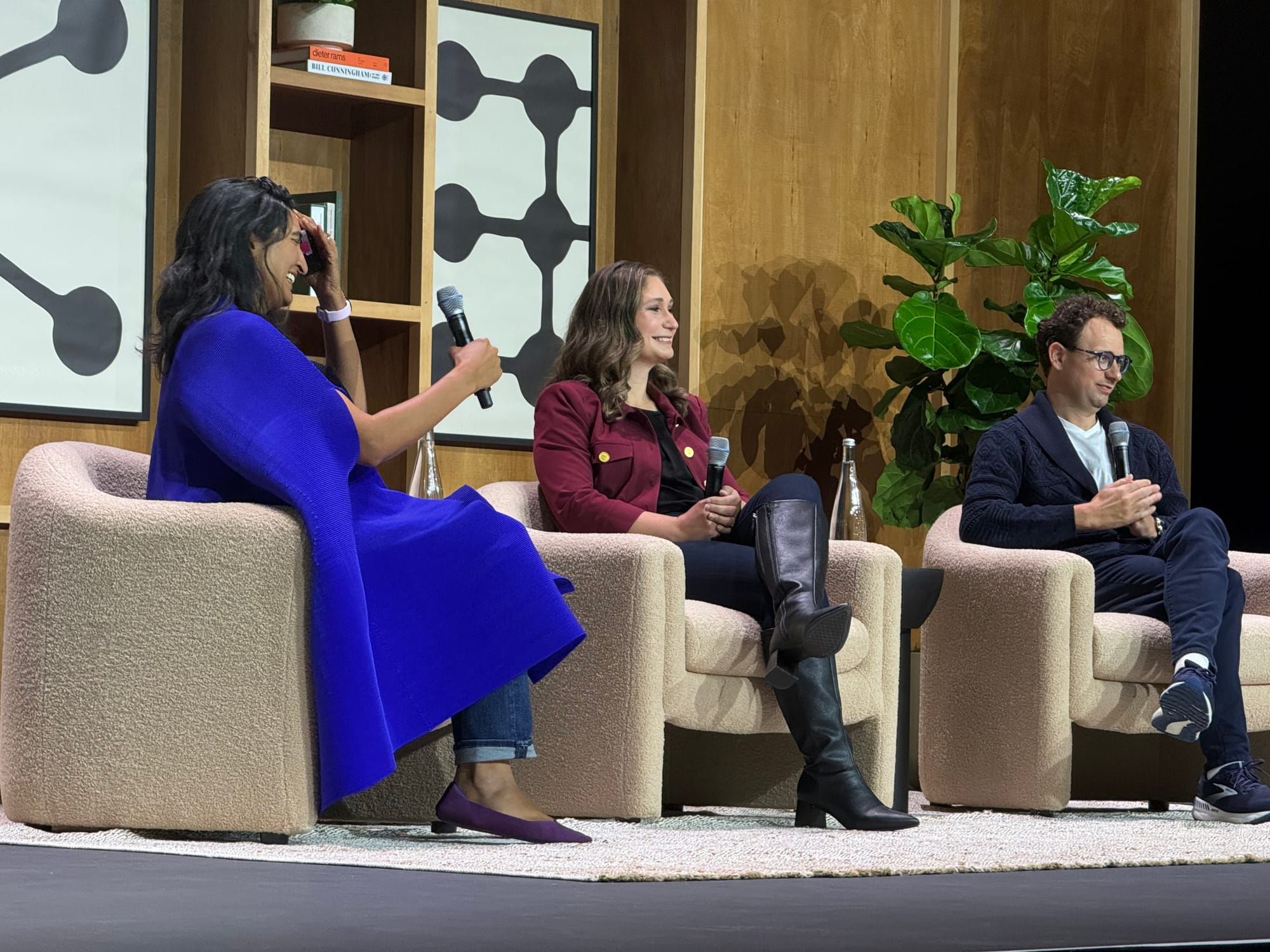
Code with Claude 2026 Recordings Now Available
In my previous post, I shared my experience attending the Code with Claude conference in San Francisco on May 6th. Anthropic has now posted recordings of the keynote and most of their sessions on the Code with Claude playlist on YouTube. Unfortunately, the workshops do not appear to be in scope for the published recordings. Fortunately, many of the workshops are publicly available and include good README.md files, so you can work on them independently.
Resources
Claude Code Workshop Repos
While the workshops themselves don't appear to be recorded, the repos for many of them are publicly available in the anthropics/cwc-workshops repository on GitHub and have enough documentation that you can still work through them at home.
I particularly liked the Eval-Driven Agent Development and Picking the Right Model workshops as exercises for improving evals. This is an area I want to invest more in myself.
Articles
I scanned QR codes for several articles shared at the conference and found a few worth sharing:
Harness design for long-running application development
I saw a working demonstration of this article running at a demo booth, where a Jira/Asana clone was being built iteratively by a team of agents that designed, implemented, verified, and deployed features using the SDK. I want to do something similar post-conference to better understand how to build harnesses and orchestrate multiple agents asynchronously.
Building and using harnesses can get expensive. Claude subscription plans don't cover API use. I'd like to get some exposure to building harnesses, but I am a bit concerned about costs while building "throwaway" projects.
Prompting best practices
Anthropic's official guidance on getting better results from your prompts.
Context engineering
Context windows are limited, and what you put in the box (and where you put it) has a remarkable impact on model performance and cost.
Building effective agents
Great guidance from Anthropic on best practices and patterns you can use to build effective agents in production.
Cookbook patterns
Working code samples for common patterns from Anthropic.
Evals for agents
How to think about evaluating agentic systems specifically. The importance of evals was a recurring theme throughout this year's conference, and it'd be good to get familiar with them.
Claude Code hooks reference
Daisy Hollman shared in her workshop that hooks are the only abstraction to extend Claude Code that doesn't consume context until they fire. This is a great way to get more out of Claude without consuming context when it isn't necessary.
Sessions
Below are the sessions I attended. Every session I attended was a good use of time. I didn't encounter a single bad session. I plan on catching up on the sessions I missed.
Keynote
There weren't any major announcements beyond the new compute deal with SpaceX and new features for Claude Managed Agents. However, the keynote did paint a vision for the near- and long-term direction Anthropic is moving in.
Live coding with Boris Cherny and Jarred Sumner
Robobun is a coding agent that has now contributed more PRs and features to Bun than Bun's creator, Jarred Sumner has himself. Jarred shares how this is accomplished, and along the way, Boris and Jarred share tips for getting more out of Claude Code.
What's new in Claude Code
A solid summary of features that have shipped in Claude Code recently that not everyone may be aware of. Worth watching if you're an active Claude Code user.
A conversation with Dario Amodei and Daniela Amodei
This session reiterated Dario's view that models are continuing to improve exponentially. While the focus so far has been on individual productivity, Dario suggested models will soon be capable of performing tasks on behalf of entire teams, business units, and even organizations. Models have been heavily applied to coding tasks because code is inherently verifiable, but Dario shared that Anthropic is investing in research to make models better at verification — opening the door to many more domains.
Running an AI-native engineering org
Fiona Fung shares how she helped structure Anthropic and the Claude Code team to operate as an "AI-native engineering organization". Coding is no longer the bottleneck for teams all-in on agentic coding. Fiona explains how norms need to be reconsidered. Fiona walks through her guiding principles of "Claudify everything" and giving teams explicit permission to kill processes.
The thinking lever
Matt Bleifer explains the concept of test-time computation and how different combinations of thinking and model choice result in remarkably different cost and quality trade-offs. I found his comparisons of traffic simulations across models at different thinking levels to be a great visual illustration of the concepts he was covering.
Getting more out of the Claude Platform
Brad Abrams shares advice on getting better results from Claude for less cost by intentionally focusing on context management and prompt caching. Attendees were encouraged to use patterns such as the advisor-executor strategy, where a more capable model advises a less capable one, to keep costs under control.
How Datadog built a universal machine tool for Claude Code
Sesh Nalla shares how Datadog designed and uses Temper, a framework that moves software development into a more regimented agentic process focused on validation, coordination, verification, and operations. Sesh suggests that software engineering is quickly moving to a world where engineers guide systems to evolve by providing feedback and validation rather than writing code line by line.
The capability curve
Alex Albert reiterates the remarkable exponential improvement of models. Today's models are far more capable of planning and running autonomously for extended periods. He stresses the importance of evals and planning for the future. Tasks that seem impossible today may be possible in a few months or a year.
If you're building with AI, the recordings are well worth the time. I'll likely revisit several of them as I work through the takeaways from my original post.